

Stretch marks, clinically known as striae distensae, are a common skin concern for people of all backgrounds. They frequently develop during periods of rapid body changes, such as growth spurts, pregnancy, bodybuilding, or sudden weight shifts. Many people use aloe vera for its soothing and moisturizing properties. This has also made aloe vera for stretch marks a popular home-care option.
However, clinical evidence does not show that applying aloe vera can erase or permanently repair established stretch marks. Stretch marks represent a form of dermal scarring within the deeper layers of skin tissue. Moisturizing products can help keep the skin hydrated and comfortable. But it is important to separate these benefits from unsupported claims about treating stretch marks.
Does Aloe Vera Get Rid of Stretch Marks?
There isn’t strong evidence that aloe vera can get rid of existing stretch marks. In one randomized trial involving 160 first-time pregnant women, aloe vera cream reduced itching and redness and limited the progression of pregnancy-related stretch marks compared with a base cream or no treatment. However, it did not significantly reduce the number or width of the marks. This suggests that aloe vera may help with comfort and early symptoms. However, it is not a proven treatment for removing stretch marks.
What Are Stretch Marks?
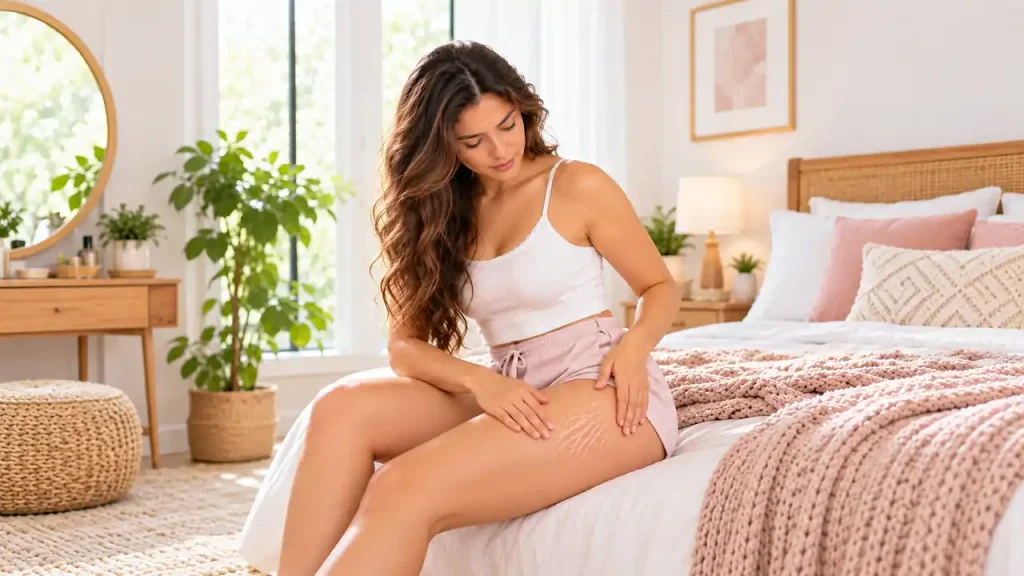
According to American Academy of Dermatology guidance on stretch marks, stretch marks are a distinct type of dermal scarring that occurs when the skin stretches or shrinks rapidly. Stretch marks develop when rapid changes in the skin disrupt the collagen and elastin that normally provide structural support. Hormonal and genetic factors can also influence who develops them. As the marks mature, their color typically fades and they may become slightly depressed.
While many people wonder whether stretch marks go away after weight changes, Established stretch marks usually fade over time but may not disappear completely. Dermatological treatments can sometimes make them less noticeable. Stretch marks commonly appear on the abdomen, breasts, hips, buttocks, lower back, and thighs. These areas often experience rapid changes in size. Stretch marks themselves are generally harmless, although many people seek ways to make them less noticeable.
What Can Aloe Vera Realistically Do for Stretch Marks?
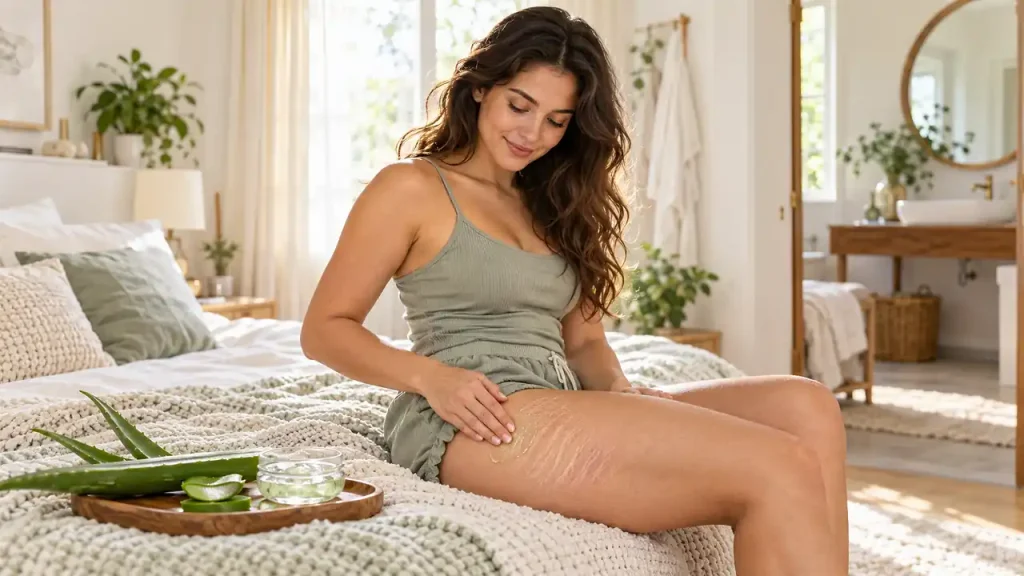
To understand what aloe vera can realistically do for stretch marks, it helps to separate moisturizing the skin from actually changing a scar:
- Soothes Tightness and Itching: As skin stretches rapidly, the surface often becomes dry, tight, and uncomfortably itchy. Aloe vera gel can provide lightweight moisture and may help soothe dry or itchy skin.
- Supports Surface Skin Softness: Regular topical application can help dry skin feel softer and more comfortable.
- What It Cannot Do: There is no good clinical evidence that topical aloe vera can remodel established stretch marks enough to erase them.
New vs. Older Stretch Marks: Why Timing Matters
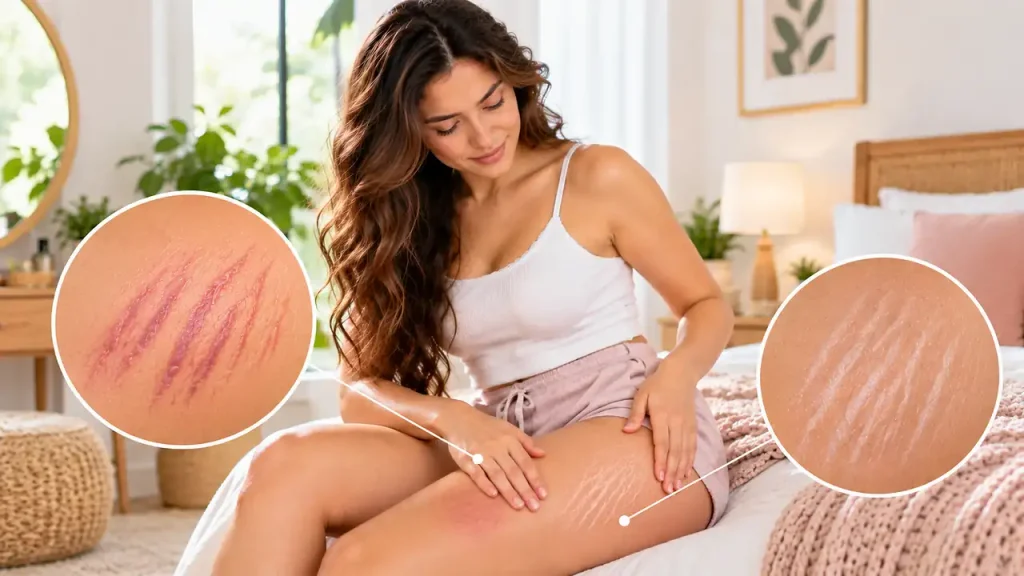
Dermatological research emphasizes that stretch marks respond very differently depending on their developmental stage:
- Early Stretch Marks (Striae Rubrae): These newer marks may appear pink, red, purple, or reddish-brown, depending on your skin tone. Early stretch marks generally respond better to treatment than mature ones, although results vary.
- Mature Stretch Marks (Striae Albae): Over many months or years, the blood vessels contract and fade. Mature stretch marks take on a pale white, silver, or slightly depressed scar-like appearance. At this stage, Mature stretch marks are generally more difficult to improve with topical treatments.
4 Ways People Use Aloe Vera for Stretch Marks
People commonly use aloe vera at home in the following ways. However, clinical research has not shown that all of these methods can fade stretch marks. Think of them primarily as skincare options rather than medical treatments:
1. Plain Aloe Vera Gel Application
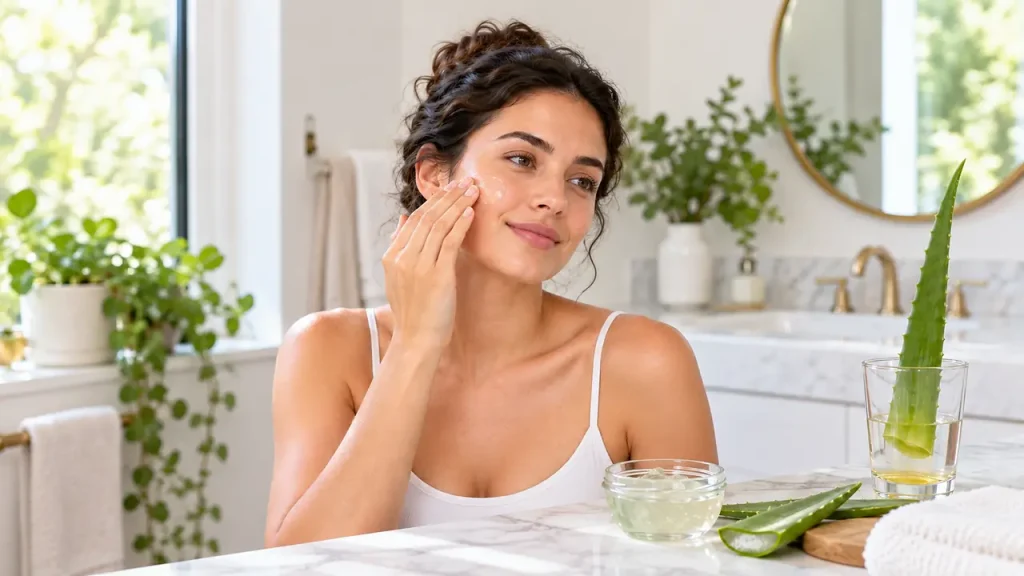
Apply a thin layer of plain aloe vera gel to clean skin and massage it gently until absorbed. If you’re using fresh aloe, use only the clear inner gel and avoid the yellow latex layer beneath the rind. Stop using it if your skin becomes irritated.
2. Aloe Vera and Pure Glycerin for Extra Moisture

Glycerin is a well-established humectant that pulls moisture into the outer skin barrier. Mixing a small amount of glycerin with aloe vera gel can provide additional moisture for dry skin. However, better hydration does not mean that stretch marks will fade or disappear.
3. Aloe Vera on Slightly Damp Skin
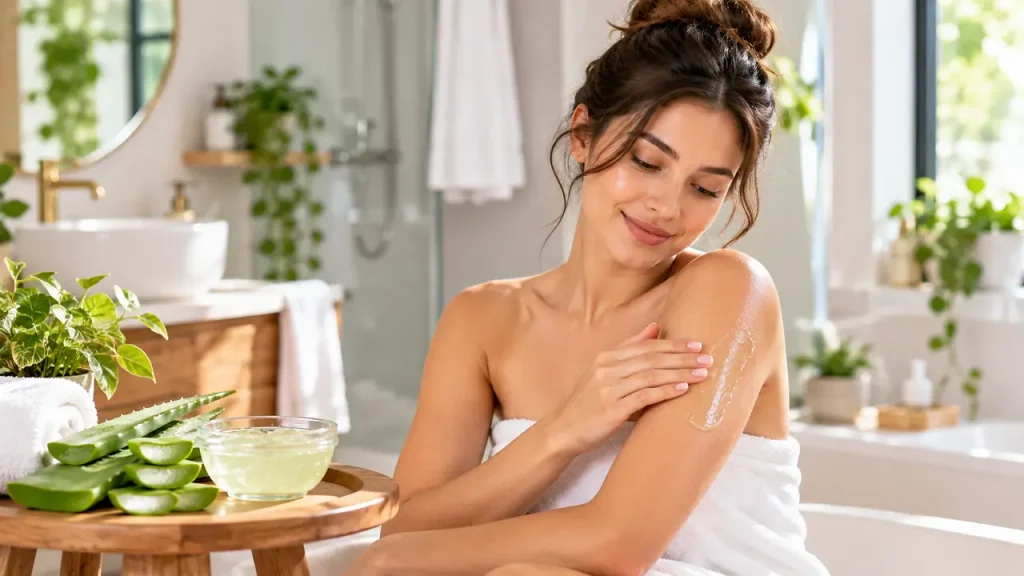
You can also apply aloe vera after bathing while the skin is still slightly damp. This can make it a convenient part of a moisturizing routine, especially if the skin feels dry or tight. Applying aloe over hydrated skin helps bind water to the surface before it evaporates.
4. Aloe Vera Followed by a Simple Moisturizer
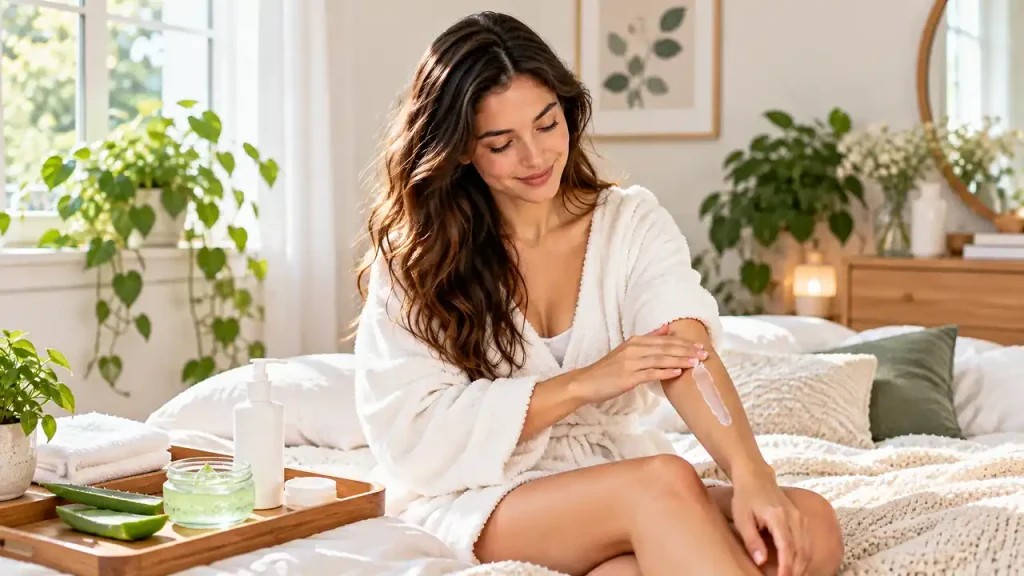
Because aloe vera gel is water-based, it can evaporate quickly in dry environments. For longer-lasting barrier comfort, allow the aloe gel to absorb fully, then layer a basic, fragrance-free body moisturizer or lotion over top to seal in the hydration.
What Treatments Have Better Evidence?
A comprehensive systematic review of stretch mark treatments evaluating dozens of clinical studies concluded that current medical evidence still does not establish a single definitive treatment that eliminates striae. However, for individuals seeking noticeable improvement, several evidence-based clinical approaches have demonstrated measurable progress:
- Prescription Tretinoin: Some evidence suggests that topical tretinoin can make early stretch marks less noticeable. It is not appropriate for everyone and should be discussed with a healthcare professional.
- In-Office Procedures: Dermatologists may use treatments such as laser therapy, microneedling, or radiofrequency to make stretch marks less noticeable. Results vary according to factors such as the age and type of stretch marks, skin type, and the procedure used.
When to Stop or Seek Medical Advice
While aloe vera is well tolerated by most individuals, botanical ingredients can still trigger contact dermatitis or allergic reactions:
- Perform a Patch Test: Before applying aloe vera over large body areas, apply a small amount to your inner forearm, and if you haven’t used aloe vera on your skin before, try it on a small area first. Stop using it if you develop persistent redness, itching, burning, or swelling.
- Important Pregnancy and Breastfeeding Precaution: Many women look for gentle ways to soothe stretch marks during pregnancy or immediately after childbirth. If you’re pregnant or breastfeeding, check with your healthcare professional before using products intended to treat stretch marks. Prescription topical retinoids such as tretinoin should not be used during pregnancy.
Stretch marks are usually related to normal changes such as growth, pregnancy, weight changes, or muscle growth. If they appear suddenly without an obvious reason, become unusually widespread, or you have other unexplained symptoms, consider discussing them with a healthcare professional.
Final Thoughts
Aloe vera for stretch marks is best viewed as a moisturizing and soothing skincare option, not a treatment that can erase existing scars. It may help dry or itchy skin feel more comfortable, but evidence that aloe vera can significantly fade established stretch marks is limited. If your stretch marks bother you and you want more noticeable improvement, a dermatologist can help you understand which treatments may be appropriate for their age, type, and your skin.



Leave a Reply