


Body shame can make you feel as though your weight, shape, size, skin, or other physical features determine your worth. These feelings may develop through criticism, comparison, unrealistic beauty standards, or negative messages about how a body “should” look. Over time, those outside judgments can become an internal voice that changes how you see yourself.
Understanding why we feel body shame is an important first step toward challenging it. You cannot control every comment or beauty standard around you. But you can question appearance-based judgments and build a healthier relationship with your body. Seek support when body concerns begin affecting everyday life.
What Is Body Shame?

Body shame refers to feelings of embarrassment, inadequacy, or self-consciousness about your body or appearance. It can involve weight or shape. It may also center on height, skin, hair, scars, disability, aging, or other physical features.
Body shaming means criticizing or mocking someone’s appearance. Body shame, by contrast, is the negative feeling a person may internalize about their own body.
Why Do We Feel Body Shame?
Body shame often grows when society praises certain body types while treating others as problems to fix. Repeated exposure to narrow beauty ideals can encourage people to compare themselves with unrealistic standards. Those standards may not reflect their genetics, health, age, circumstances, or natural body shape.
Social Media Can Intensify Body Comparison

Frequent exposure can make appearance comparison easier to fall into, prompting people to evaluate their everyday appearance against unrealistic benchmarks. Recognizing the pros and cons of social media is an important step in noticing how online spaces subtly shape your self-image.
Research has found a consistent association between online social comparison and body-image concerns: a systematic review and meta-analysis of 83 studies involving over 55,000 participants found that higher online social comparison was significantly associated with greater body-image concerns and eating-disorder symptoms, alongside lower positive body image.
Body Shaming Is Not Helpful Motivation

People may frame comments about someone’s appearance as concern or motivation. But shame is not the same as support. Repeated appearance criticism can deepen body dissatisfaction and emotional distress. It rarely helps someone build a healthier relationship with food, movement, or their body.
Research also challenges the idea that weight-related stigma is harmless motivation. A systematic review of 242 studies found consistent associations between weight stigma and disordered-eating thoughts and behaviors. These included body dissatisfaction and unhealthy weight-control practices.
Unrealistic Beauty Standards Can Shape How We See Ourselves

Popular culture and fashion media frequently promote a very narrow range of physical attributes as the single desirable standard. Naturally thin and curvier bodies exist across the population, but problems arise when society treats one particular body type as the universal ideal everyone must achieve. Professional styling, strategic lighting, editing, and digital filters can make these ideals appear more ordinary and attainable than they really are.
You Cannot Judge Someone’s Health by Their Appearance

Many factors, including genetics, health conditions, medications, hormones, environment, lifestyle, age, and life stage, influence body size and appearance. Looking at someone’s body does not tell you their complete health story, and assumptions about why they gained or lost weight can be both inaccurate and harmful. A person’s overall health cannot be determined from appearance alone.
When Healthy Habits Become Appearance Obsession

Exercise, nutritious food, and other health-supporting habits can be positive parts of life. When rooted in balanced fitness habits, regular movement can support physical and mental well-being. But when exercise becomes punishment for eating, missing a workout triggers intense guilt, or body checking begins dominating everyday thoughts, the pursuit of fitness may be becoming emotionally unhealthy.
How Can Body Shame Affect You?
Persistent body shame can affect far more than how someone feels in front of a mirror. It may contribute to self-doubt, avoidance of social situations, or allowing appearance to play an outsized role in self-worth. Taking steps to boost your self-esteem can help shift attention toward a broader sense of personal value. For some people, concerns about weight, shape, food, or exercise can become severe enough to interfere with daily life and may occur alongside an eating disorder or another mental health difficulty.
How to Overcome Body Shame
Overcoming body shame often involves gradually changing how you respond to appearance-related thoughts, comparisons, and comments.
1. Notice How You Talk to Yourself
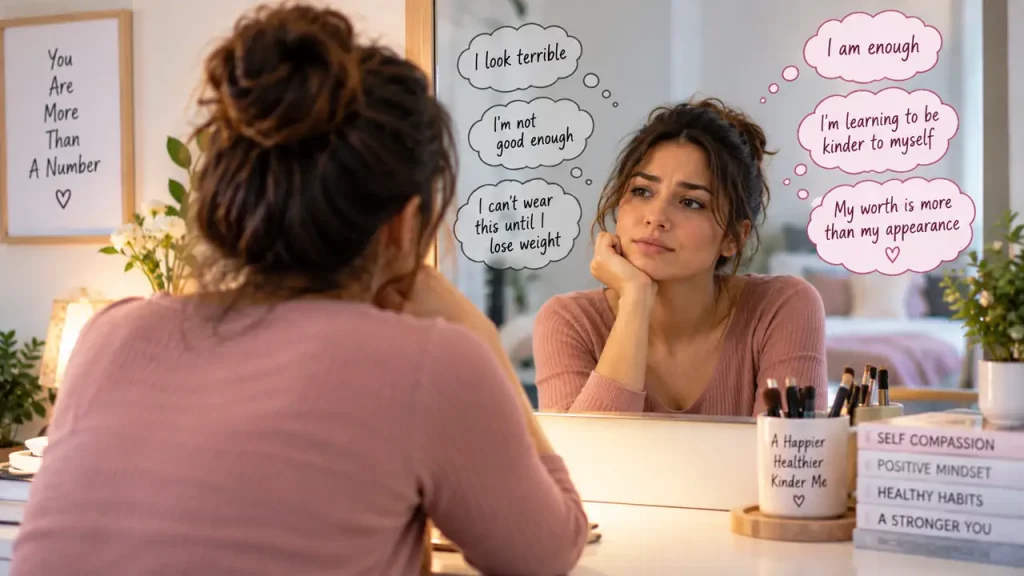
Your first target is not your body; it is the constant judgment of it. Catch automatic internal statements such as “I look terrible” or “I can’t wear this until I lose weight.” Simply noticing these thoughts creates the space to question whether you would ever speak that way to someone you care about. A realistic starting goal is not forced positivity but reducing everyday hostility toward yourself.
2. Challenge the Idea That Appearance Determines Your Worth

A person’s value is not determined by weight, clothing size, skin, age, or proximity to a beauty standard. Actively redirect your focus toward other dimensions of your life—such as character, curiosity, and relationships. Drawing encouragement from body positivity quotes can serve as a gentle reminder to challenge appearance-based self-criticism.
3. Change What You Consume Online

Take active control of your digital environment. Mute or unfollow accounts that consistently trigger self-criticism, comparison, or inadequacy. Intentionally follow creators, writers, and communities that represent diverse bodies, focus on mental wellness, or center on creative hobbies unrelated to appearance.
4. Set Boundaries Around Comments About Your Body

You do not have to accept unsolicited comments about your weight, shape, or food choices—even when they come from family members, coworkers, or close friends. Prepare simple, firm statements in advance:
“I’d rather not discuss my weight or body. Let’s talk about something else.”
Having a direct boundary ready makes it easier to change the subject without having to defend your appearance.
5. Get Support When Body Shame Starts Controlling Your Life

If appearance concerns begin interfering with your eating patterns, exercise habits, or relationships, support is available. Protecting your broader emotional well-being often involves opening up to trusted loved ones or speaking with a qualified healthcare or mental-health professional. A qualified professional can help you explore internalized shame, understand unhelpful patterns, and develop healthier ways of relating to your body.
Final Thoughts: Your Body Is Not a Measure of Your Worth
Ending body shaming also means paying attention to how we speak about our own bodies. A joke about someone else’s weight, an unsolicited comment about appearance, or constant criticism of your own body can reinforce the idea that bodies should be judged primarily by how they look.
Overcoming body shame does not require loving every part of your appearance every day. A healthier goal is learning to treat your body with respect, challenge the standards that make you feel inadequate, and stop allowing appearance to determine your worth.



A very inspiring and eye opening view about health because now a days everyone is blindly copying the all sorts of things on their body without knowing that each one is unique biologically and emotionally. Every individual has their own sets of beliefs regarding health and nutrition unless someone really awakens their own power of healing which God has given to their body and mind. So respect not only your own body but others as well knowing the fact that they are different from you.
In a time and age where everyone is obsessed with having things 'slim' – from smartphones to watches to TV's, glad to see someone actually looking at the truest, human element attached with slimming; and taking it further by associating with the obsession behind it.